
Organic-inorganic metal-halide perovskites have revolutionized the field of solution-processed photovoltaics within the last few years, whereas ferroelectric titanate-based perovskites are the most widely used piezoelectric materials. However, merging these two fields of opto-electronics with ferroelectrics to obtain improved energy-harvesting devices is a still unsolved problem.
While in the first period of this project we followed the idea to improve the crystal growth of the Pb-halide based materials to clarify their collaborative optoelectronic and ferroelectric properties, the conclusion must be that Pb based metal-halide perovskites can have crystal structures basically supporting ferroelectric properties, their high electrical conductivity disables effective ferromagnetic poling by applied fields.
Thus, in the second phase metal oxide perovskites have been in the focus of the project, which show the opposite – they are good ferroelectric materials but obey too high band gap energies to provide sufficient light absorption in the visible.
Thus, in the third phase we plan to investigate a third class of perovskites – metal free molecular perovskites (MOPs) and eventually crystals with ferroelectricity due chirality of included organic molecules. While MOPs, as the perovskite oxides, are optically transparent in the visible, they could applied in solar cells at least as charge selective layers, replacing for instance metal-oxide nanoparticle layers. First chirality based ferroelectric materials have been reported in literature, with band gap energies similar to those of the lead-halide perovskites, exhibiting not only ferroelectric hysteresis loops but also a bulk-photovoltaic effect. Tested in thin film solar cell configuration with TiO2 based electron transport layers, these materials exhibit also conventional photovoltaic effect, however, with a power conversion efficiency giving substantial room for improvements. These improvements should be achieved in project J in a twofold way, by improving the quality of these materials via syntheses, as well as by improving the solar cell architectures.
Achieving improvements require close collaborations with the partner projects within the IRTG as well with our partner project at the Nagoya Institute of Technology.
Principal Investigators
 | Prof. Dr. Wolfgang Heiß Institute of Materials for Electronics and Energy Technology Department of Materials Science and Engineering Friedrich-Alexander-Universität Erlangen wolfgang.heiss@fau.de |
 | Prof. Dr. Shinji Kawasaki Department of Life and Applied Chemistry Nagoya Institute of Technology, Japan kawasaki.shinji@nitech.ac.jp |
Assoc. Prof. Yosuke Ishii Department of Life and Materials Chemistry Nagoya Institute of Technology, Japan ishii.yosuke@nitech.ac.jp | |
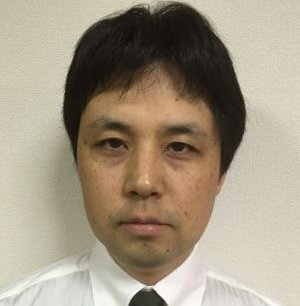 | Assoc. Prof. Naoki Kishi Department of Electrical and Mechanical Engineering Nagoya Institute of Technology, Japan kishi.naoki@nitech.ac.jp |
Doctoral Researchers
 | Ali Elkholey, M. Sc. Institute of Materials for Electronics and Energy Technology Department of Materials Science and Engineering Friedrich-Alexander-Universität Erlangen ali.elkholey@fau.de |
 | Daiki Hayashi, M. Sc. Joint Degree Doctoral Program in Energy Conversion Systems Nagoya Institute of Technology, Japan d.hayashi.170@stn.nitech.ac.jp |
 | Kaoru Matoba, M. Sc. Joint Degree Doctoral Program in Energy Conversion Systems Nagoya Institute of Technology, Japan k.matoba.454@stn.nitech.ac.jp |
Soo Yeon Kim, M. Sc. Nagoya Institute of Technology, Japan |
Associated Researchers
Shuyu Zhou, M. Sc. (FAU): shuyu.zhou@fau.de